
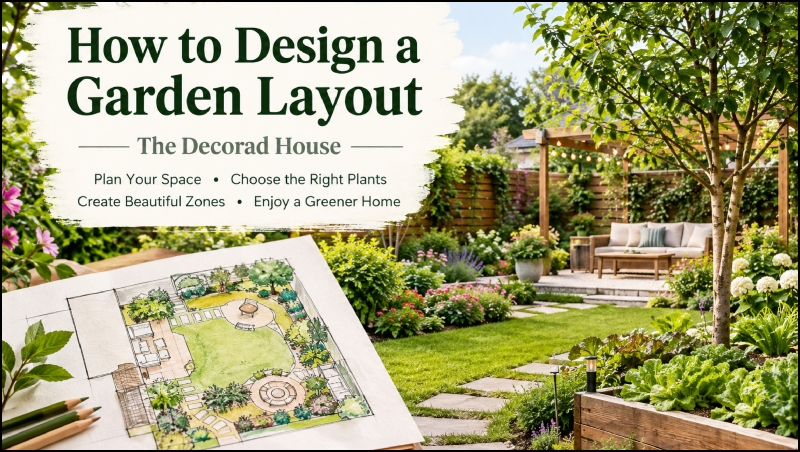
A beautiful garden doesn’t start with buying pretty plants. It starts with a smart plan.
Before you dig or shop, take time to understand your space and decide what you actually want from it.
This simple, step-by-step guide will help you design a garden that looks great, works well for your daily life, and stays easy to maintain.
Observe Your Garden First
Spend a few days watching your garden at different times — morning, afternoon, and evening.
Notice:
- Which areas get full sun, partial shade, or mostly shade
- Where water collects after rain
- Existing features that can’t be moved (fences, trees, walls, doors, windows)
Measure the length and width of your garden and sketch a rough plan on paper. It doesn’t need to be perfect. Taking photos from different angles also helps.
This first step prevents many expensive mistakes later.
Decide What You Want from Your Garden
Ask yourself one clear question:
“What do I want to do in this garden?”
Your answer shapes everything.
Possible priorities:
- Growing vegetables or herbs
- A quiet seating area for tea or reading
- A safe open space for children
- Attracting birds and butterflies
- A small outdoor dining corner
Write down your top 2–3 priorities. A well-planned garden can serve more than one purpose if the layout is clear.
Divide the Garden into Simple Zones
Think of your garden as outdoor rooms. Each zone has a job:
- Entry Zone – Gate and main walkway
- Planting Zone – Flowers, vegetables, or shrubs
- Seating Zone – Relaxation and conversation
- Utility Zone – Tools, compost, storage, and watering points
You don’t need walls. Paths, low borders, different materials, or plants can separate the areas naturally.
Place things where you’ll actually use them. Keep herbs close to the kitchen. Put the compost bin in a less visible corner.
Check Sunlight Properly
Never choose plant locations based only on how they look at the nursery.
Observe how sunlight moves through your garden and mark three zones:
- Full sun
- Partial shade
- Mostly shade
Remember that shade can change with seasons and as trees grow. Place plants according to their real light needs. Vegetables and most flowering plants need plenty of sun, while many leafy plants prefer shade.
Test the Soil and Drainage
Healthy plants need good soil and proper drainage.
Dig small test holes in different parts of the garden. Check if the soil is sandy, heavy clay, or soft and rich. See how long water stays on the surface after rain.
If water sits for a long time, improve drainage before planting. You can improve soil with organic matter, but first understand the problem.
Plan Paths for Real Movement
Paths should take you where you actually walk every day:
- From the back door to the vegetable beds
- From the gate to the seating area
- From the garden to the storage area
Make paths wide enough for comfortable walking and for carrying a watering can or wheelbarrow. Curved paths create interest and a sense of discovery. Straight paths work well in modern, simple designs.
The best path feels natural when you walk on it.
Make Garden Beds Easy to Reach
Beds should be practical as well as beautiful.
If a bed is too wide, you’ll step on the soil to reach the middle plants, which compacts the earth. Keep the depth manageable if you can only access one side. You can make beds wider if they are accessible from both sides.
Leave clear space between beds for walking and maintenance. Always plan for the mature size of plants, not just how they look when small.
Choose Plants After the Layout Is Ready
Many beginners buy plants first and then struggle to place them. Do the opposite.
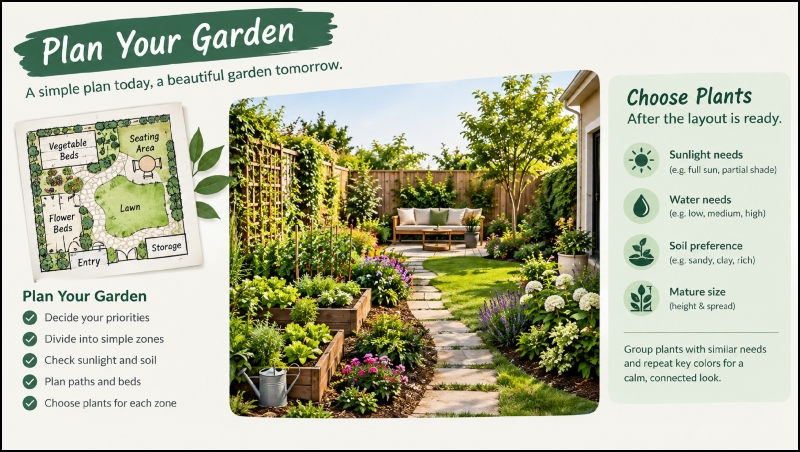
Once your basic layout is clear, make a plant list for each zone and check:
- Sunlight needs
- Water needs
- Soil preference
- Mature height and spread
Group plants with similar water and care requirements together. This makes watering and maintenance much easier. Repeat a few key plants or colors throughout the garden for a more connected, peaceful look.
Create Layers for Visual Interest
A garden with plants of only one height looks flat.
Use layers:
- Tall plants, shrubs, or small trees at the back
- Medium-height plants in the middle
- Low flowers or groundcovers at the front
Mix different leaf shapes, textures, and colors. Also think about every season — spring flowers, summer color, autumn leaves, and winter structure.
Make a Small Garden Feel Larger
Small gardens can feel spacious if planned carefully.
Tips that work well:
- Choose one or two strong ideas and repeat them
- Use vertical space (trellises, climbing plants, wall planters, raised containers)
- Keep paths simple and use similar materials
- Choose light-colored surfaces
- Add one clear focal point (a bench, large planter, or attractive plant)
The goal is not to fit everything in. The goal is to make every part useful.
Add One Strong Focal Point
Every good garden needs something that draws the eye. This could be:
- A beautiful tree
- A comfortable bench
- A fountain or large planter
- An attractive gate or sculpture
Place it where it can be seen from the seating area, a window, or the end of a path. One well-chosen feature is more effective than many small decorations.
Think About Privacy and Views
Decide which views you want to keep open and which ones you want to hide.
For privacy use tall shrubs, small trees, climbing plants, or screens. Leave some open views — they make the garden feel larger. Also check the view from your favorite chair, kitchen window, and garden entrance.
Plan Watering and Maintenance from the Start
A garden is more enjoyable when it is easy to care for.
Group plants with similar water needs. Leave space for pruning, weeding, and moving around. Use mulch to reduce weeds and hold moisture. Choose low-maintenance plants if your time is limited.
Always think about future growth. Trees will cast more shade, shrubs will spread, and roots can affect nearby areas.
Test the Layout Before You Build
Don’t dig until you test the plan on the ground.
Use a garden hose, rope, sticks, or temporary pots to mark beds and paths. Then walk through the space as if it is finished. Ask yourself:
- Can I easily reach the plants?
- Is the path wide enough?
- Is the seating area comfortable?
- Can I see the focal point from the main seating area?
Temporary markers can be moved easily and save you from costly changes later.
Design for the Future
Imagine how the garden will look in one, three, and five years.
Leave enough space for plants to reach their mature size. Don’t plant large trees too close to buildings or paths. Keep some open space for future ideas — a greenhouse, extra seating, or more vegetable beds.
A flexible layout gives you freedom to change and grow with the garden.
Common Mistakes to Avoid
- Buying plants before checking sunlight and space
- Making paths too narrow or placing them where people don’t naturally walk
- Using too many different colors, materials, and decorations in a small garden
- Planting too close together
- Ignoring long-term maintenance needs
- Copying another garden exactly without considering your own sunlight, soil, climate, and lifestyle
Final Thoughts
A beautiful garden is the result of thoughtful planning, not just beautiful plants.
When you understand your space, decide your priorities, and create clear zones, the rest becomes much easier.
At DecoradHouse we believe every outdoor space — no matter how small — can become a place you love to use every day. Start with observation and a simple plan, and your garden will reward you for years to come.
Ready to begin? Sketch your garden this weekend and take the first step toward a space that truly works for you.
Disclaimer
The information provided in this article is for general informational and inspiration purposes only. The garden layout ideas, planting suggestions, design tips, and outdoor recommendations are based on general gardening and home improvement concepts and may not be suitable for every garden, location, climate, or budget. Before making major landscaping changes or selecting plants, consider your local climate, soil conditions, and available space. For complex landscaping, structural work, irrigation, or electrical work, consult a qualified professional. Decoradhouse is not responsible for any loss, damage, injury, or expense resulting from the use of the information provided in this article.
For more information or suggestions, Please Contact us.
Pingback: Home Exterior Decoradhouse – Simple Exterior Ideas -